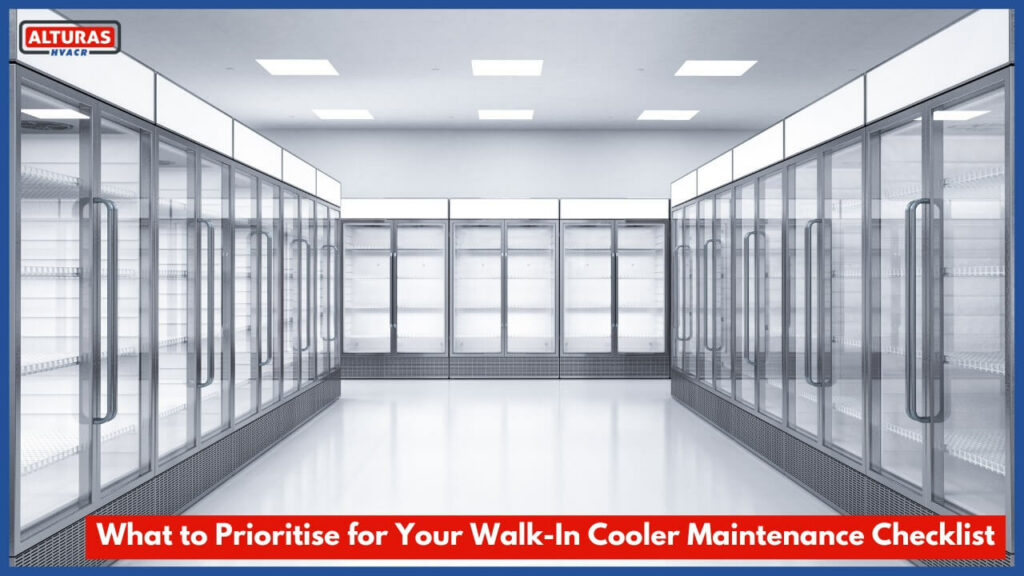
If you operate in the food service industry, you already understand how critical it is to store food at consistent, safe temperatures. A commercial walk-in cooler plays a vital role in maintaining food quality, preventing contamination, and ensuring compliance with health and food safety regulations.
However, an underperforming walk-in cooler—especially during hot Los Angeles summers—can quickly lead to food spoilage, health code violations, unexpected downtime, and financial losses. That’s why following a preventive walk-in cooler maintenance checklist is essential for restaurants, grocery stores, and commercial kitchens.
This guide provides a complete, easy-to-follow walk-in cooler maintenance checklist, including daily, weekly, monthly, and professional service tasks to help you extend equipment life and avoid costly breakdowns.
Quick Walk-In Cooler Maintenance Checklist
Use this quick checklist to stay organized and compliant.
✅ Daily Walk-In Cooler Maintenance
- Check and log internal temperature (35–38°F)
- Ensure doors close fully and lights turn off
- Clean food spills immediately
- Listen for unusual noises or vibrations
- Confirm airflow is not blocked by stored items
✅ Weekly Walk-In Cooler Maintenance
- Clean interior shelves, walls, and floors
- Inspect door gaskets for tears or gaps
- Check drain lines for clogs
- Inspect fans for smooth operation
- Remove unnecessary or expired inventory
✅ Monthly Walk-In Cooler Maintenance
- Clean evaporator coils
- Clean condenser coils
- Clean fan blades and fan grills
- Inspect hinges, latches, and door alignment
- Compare thermostat reading with an actual thermometer
✅ Quarterly Maintenance (Recommended)
- Inspect electrical wiring and connections
- Check defrost system operation
- Inspect refrigerant lines for oil stains or leaks
- Verify drain line heat tape operation
✅ Annual Professional Maintenance
- Full commercial HVAC inspection
- Refrigerant pressure and performance testing
- Motor lubrication
- Electrical component testing
- Preventive system calibration
What to Prioritize in a Commercial Walk-In Cooler Maintenance Checklist
Following a structured maintenance plan helps reduce energy consumption, improve cooling efficiency, and avoid emergency repairs. Below are the most important tasks explained in detail.
Visually Inspect Unit
During the visual inspection of the unit, scrutinize for corrosion on fins, cabinet, copper tubing, and solder joints. Evaluate fan blades and sheet metal panels for excessive vibrations, identifying problematic fan cells. Detect oil stains on headers, return bends, and coil fins, and employ an electronic leak detector on suspect areas.
Additionally, ensure the drain pan is clear of debris, obstructions, or ice buildup, allowing proper drainage. Regular checks contribute to the unit’s optimal performance and longevity.
Clean The Equipment (inside and outside)
It is important for you to clean food and beverage spills and drips on a timely basis as part of your daily walk in cooler cleaning. The longer you let a spill settle, the harder it will be for you to clean it without the use of a harmful cleaning agent. Be careful not to use steel wool and other abrasives and chemicals, such as bleach. This can damage your appliance’s finish.
Moreover, uncleaned spills also lead to unpleasant odor that can affect the quality of your ingredients. Furthermore, mold growth can jeopardise the safety of your food.
Clean Evaporator Coils
To maintain optimal performance, periodically clean the evaporator coil and blades using a brush, pressurized water, or an approved cleaner. Avoid acid-based cleaners. Ensure thorough rinsing, paying attention to the drain pan and line.
Additionally, inspect fans, ensuring smooth rotation, tight screws, and proper blade condition. Lubricate motors if applicable. For overall unit inspection, scrutinize for corrosion, unusual vibrations, oil stains, and clear drain operation. Regular checks enhance system efficiency and longevity.
Thorough Cleaning of Condenser Coils
One of the important tasks in the walk in Cooler maintenance checklist is to clean the condenser coils. A walk-in cooler can not do its work properly when the coils are blocked with dust and debris. These coils must be clear so that the refrigerant can cool the refrigerator to maintain a constant temperature.
Clean Drain Lines
Regularly clear drain lines to prevent clogs and ensure proper drainage, avoiding potential issues with water accumulation and system efficiency.
Prevent Overcrowding
When coming up with a walk-in cooler maintenance checklist, make sure you are not overcrowding the cooler with unnecessary food items. The air will not be able to circulate in a refrigerator packed to the gills freely. This will make the unit work harder to maintain its set temperature.
Inspect Hinges, Latches, and Gaskets
Another regularly performed task on your walk in cooler maintenance checklist should be air leak inspections. Any tear in the gaskets or broken or misaligned door hinges and latches can cause cold air to escape and warm air from outside to seep into the refrigerator. It can compromise the food and cause an excessive load on the refrigerator’s compressor to maintain the optimum temperature. Inspect walk-in cooler hinges and door sealings once a month.
Check Interior Lights
Although checking the interior lights may seem trivial in a walk in cooler maintenance. But lights generate heat, which is another reason your refrigeration units might be working harder than necessary.
Clean Fans and Fan Grills
Incorporate fan and fan grill cleaning into your preventive walk-in cooler maintenance checklist. Regular cleaning ensures efficient airflow, preventing dust and debris buildup that can compromise the cooling system’s performance.
Check Temperature & Defrost Settings Regularly
Another tip for your walk in cooler maintenance checklist is to check your temperature and defrost frequency settings daily. If the temperature is set lower than it is necessary, your system will be working too hard. This can shorten its life. Moreover, ice could form, especially on liquids. On the other hand, if your temperature is not cool enough, your food will spoil.
Check Thermostat Vs. Actual Thermometer
Verify thermostat accuracy by comparing it to an actual thermometer. Periodically cross-checking ensures the thermostat’s precision, promoting an accurate temperature setting within your system. It is crucial for maintaining optimal conditions in walk in cooler environments.
Defrost
Excessive ice buildup is caused by fluctuating temperatures inside the cooler. As fluctuating temperatures mean inventory is melting and then refreezing, it can compromise the food items inside. Ice buildup on the evaporator coil, air ventilation, or drain pipe is also alarming and can be threatening to your food inventory.
Ensure you follow the manufacturer’s recommendations for defrosting for regular commercial fridge maintenance. Similarly, defrosting your unit too often can create unnecessary work for your walk-in cooler.
Examining the Electrical Wiring And Other Components
For thorough electrical inspection, visually examine wiring for damage and secure all connections. Verify fan cycle and defrost controls, adjusting defrost cycles as needed based on ice patterns. Compare defrost heater amp draw to unit data plate, ensuring even heater contact. Also, check drain line heat tape for proper operation
Maximise Airflow by Clearing The Surrounding Area
Besides the proper interior airflow, appropriate exterior airflow is equally important and shouldn’t be overlooked. Unfortunately, kitchens are often cramped spaces. Even if you have little room to spare, you mustn’t block the air intake and exhaust vents of your walk-in cooler. If you do, your unit will have to work harder to cool the food stored inside.
This not only consumes extra electricity units but could also decrease the life expectancy of your equipment.
Common Walk-In Cooler Maintenance Mistakes to Avoid
Avoid these frequent errors:
- Ignoring dirty condenser coils
- Overcrowding shelves
- Delaying gasket replacement
- Skipping temperature logs
- Using harsh cleaning chemicals
- Ignoring minor leaks or unusual noises
Preventive maintenance always costs less than emergency repairs.
Professional Walk-In Cooler Maintenance in Los Angeles
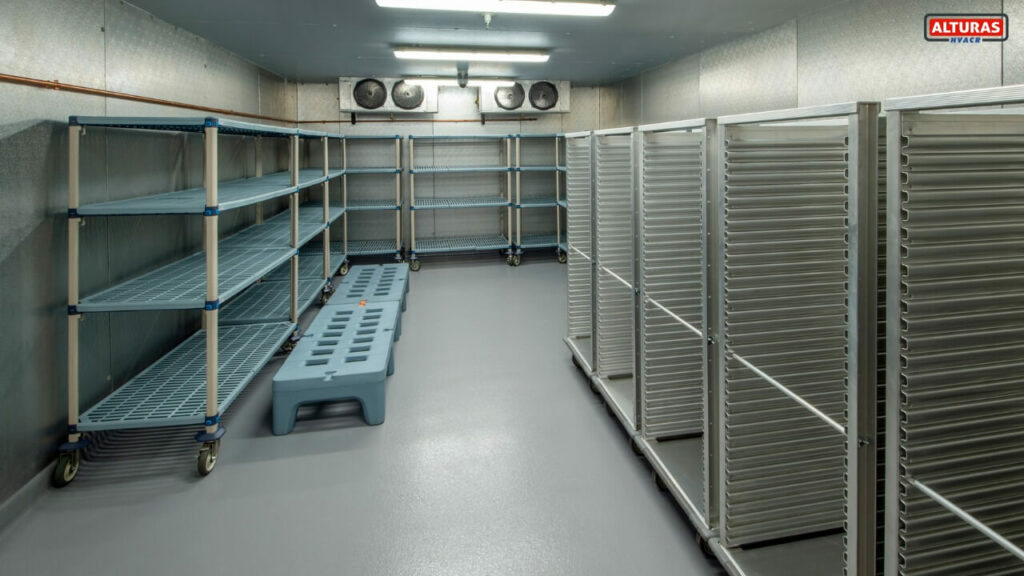
As long as you are using the right tools, cleaners and cleaning methods, there are many tasks that you can manage yourself. However, most busy restaurant managers choose to assign these tasks to an HVAC company Los Angeles. HVAC technicians can do the job better as they have the proper equipment and supplies to do the work safely and efficiently. Following are the tasks that can be handled by an HVAC company.
Related: How to Clean your HVAC Coil
Tasks Best Handled by HVAC Professionals:
- System performance calibration
- Deep coil cleaning
- Fan motor servicing
- Refrigerant pressure checks
- Electrical diagnostics
Schedule Walk-In Cooler Maintenance or Repairs With Alturas HVAC contractors
Are you looking for your commercial walk-in cooler repair Los Angeles or maintenance service? Then don’t look any further and call Alturas HVAC contractors right away. We are a well-known and trustworthy HVAC company that provides HVAC installation and HVAC repair services in Los Angeles. We are well aware of what to prioritise for your Walk-In Cooler Maintenance. Our professional commercial HVAC installers and technicians ensure each installation and repair meets your requirements. This way you can focus on your business rather than your equipment’s upkeep. Alturas will guarantee you solutions and quality assistance for any walk-in cooler queries with our extensive industry expertise.
Common FAQs About Walk-In Cooler Maintenance
How often should a walk-in cooler be cleaned?
About once a month, clean the inside and outside surfaces of your walk-in cooler using a mild detergent and water solution. The interior of the cabinet can be sanitized with a mild solution of bleach and water during the monthly cleaning of the walk-in cooler.
What is a daily practice in cooler maintenance?
A daily practice in cooler maintenance involves inspecting and recording temperature settings to ensure they meet the desired levels. Additionally, visually checking for any signs of leaks, unusual sounds, or malfunctions is recommended.
How do you service a walk-in chiller?
Servicing a walk-in chiller involves regular tasks like cleaning coils, checking refrigerant levels, inspecting electrical components, verifying thermostat accuracy, and addressing any signs of wear or damage.
