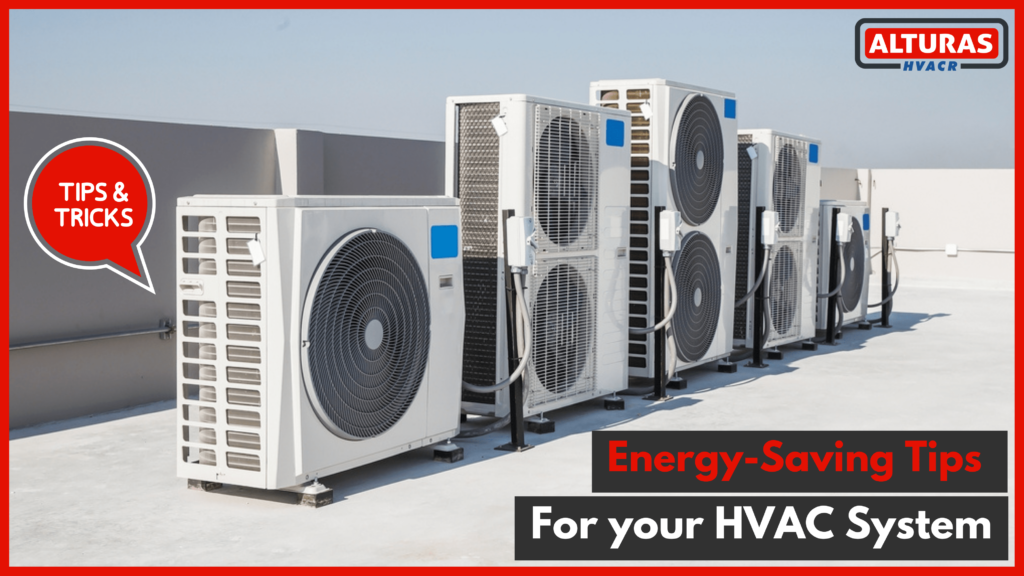
An HVAC system is one of the most essential components of any home or commercial building. It regulates indoor temperature, humidity, and air quality to maintain a comfortable environment throughout the year—regardless of outdoor weather conditions. However, what many property owners don’t realize is that HVAC energy efficiency has a direct impact on monthly utility bills and system lifespan.
In fact, studies show that heating and cooling account for nearly 50% of a building’s total energy consumption. If your energy bills have suddenly increased, your HVAC system is often the biggest contributor. The good news is that by following the right energy saving tips for your HVAC system, you can significantly reduce energy usage, lower costs, and extend equipment life—without expensive upgrades.
This guide explains how to reduce HVAC energy consumption using proven, cost-effective strategies for both residential and commercial properties.
Quick HVAC Energy-Saving Tips
- Schedule professional HVAC maintenance twice a year
- Install a programmable or smart thermostat
- Replace or clean air filters regularly
- Seal duct leaks and improve insulation
- Set optimal thermostat temperatures
- Upgrade to energy-efficient HVAC equipment
How to reduce HVAC energy consumption
Even if you already own an energy-efficient unit, proper HVAC energy management is essential to maximize savings. The following HVAC energy-saving tips are affordable, practical, and effective.
Conduct Regular Maintenance
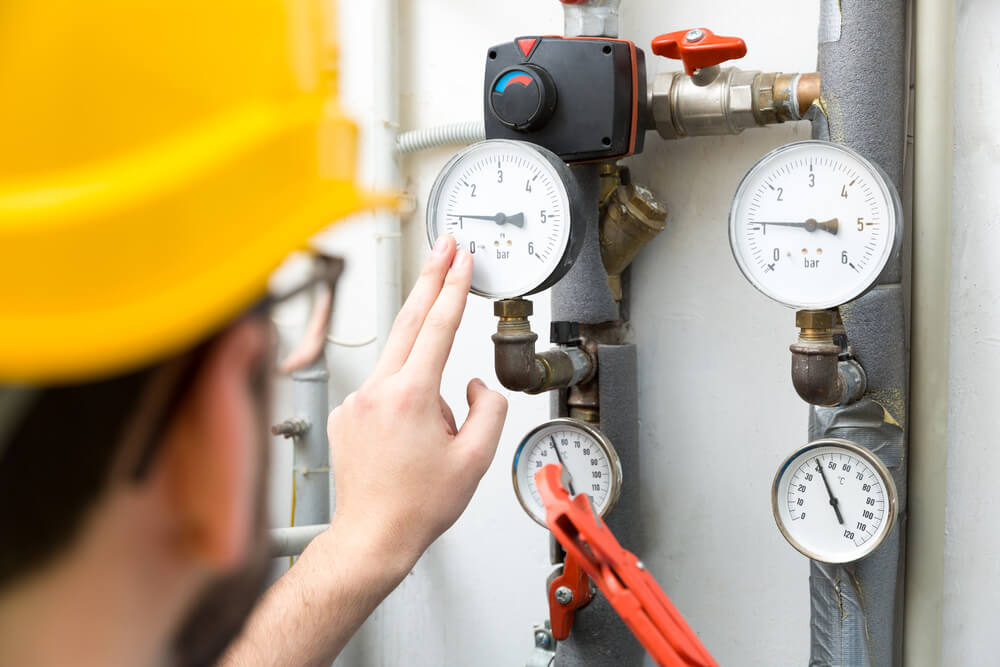
Routine HVAC maintenance is one of the most effective ways to ensure your system operates at peak efficiency. When HVAC components are neglected, dust buildup, worn parts, and airflow restrictions force the system to work harder—leading to higher energy consumption and unexpected breakdowns.
Ignoring small issues can result in major system failures and costly repairs. That’s why professional HVAC technicians recommend a full system inspection at least twice a year, ideally before summer and winter seasons.
Benefits of regular HVAC maintenance:
- Longer equipment lifespan
- Lower energy bills
- Improved system performance
- Fewer breakdowns
Therefore, it is imperative to have HVAC maintenance on a regular basis. Have your HVAC technician conduct a full inspection twice a year.
Invest in a Whole New System
Like every other appliance, the HVAC system also has a life-limited expectancy. Alternatively, if you keep on relying on your twenty years old HVAC systems, to avoid replacing the old one, it will cost you high energy bills. The HVAC system might collapse one day.
Consider installing a whole new energy-efficient system with energy-efficient HVAC ducting before it’s too late. Check for units with high SEER ratings and energy Star-Rated models that adhere to strict energy efficiency guidelines.
Install Programmable Thermostats
Programmable thermostats can reduce a considerable amount of energy consumed by HVAC units. As most people forget to adjust their thermostats before leaving their homes or workplace, a programmable thermostat is an affordable tool.
These systems allow temperatures to be automated, so they can change depending on the time of day and weather conditions outside. Therefore, it takes some workload off the HVAC system itself. A change in temperature during the day when nobody is home can make a drastic difference on your electricity bill.
Invest in Higher Efficiency Equipment
If you are planning to replace the existing HVAC system or are selecting HVAC equipment for a new building, consider buying energy efficient HVAC systems for commercial buildings or residential areas. It may cost you more money at the time of purchase but it will save you a lot of money in the long run.
Choose higher SEER and EER for the air conditioning and higher AFAU furnaces. Increasing the SEER rating from 13 to 20 would save energy by 65% of the consumed energy by the air conditioner.
Retrofit when necessary
Even if your system is well-maintained systems, some of its parts need to be changed every now and then. A part exchange or retrofit can save you a great deal on your energy bills, and help your system run better.
Although parts like heat pumps and air conditioning compressors aren’t cheap, they are less expensive than new systems. An occasional retrofit is better than buying a whole new system. Likewise, changing air filters, Fan controls, and air-side economizers can also increase efficiency when properly installed.
Clean Your Air Filters
With the continuous use of HVAC system, the air filters collect dirt, dust, and other debris. The filters get clogged and resultantly, the system has to work harder than usual. This causes the utility bills to increase. Therefore, it is recommended to regularly clean or replace your air filters.
Related: Commercial HVAC Air Filters Guide
Keep the temperature optimum
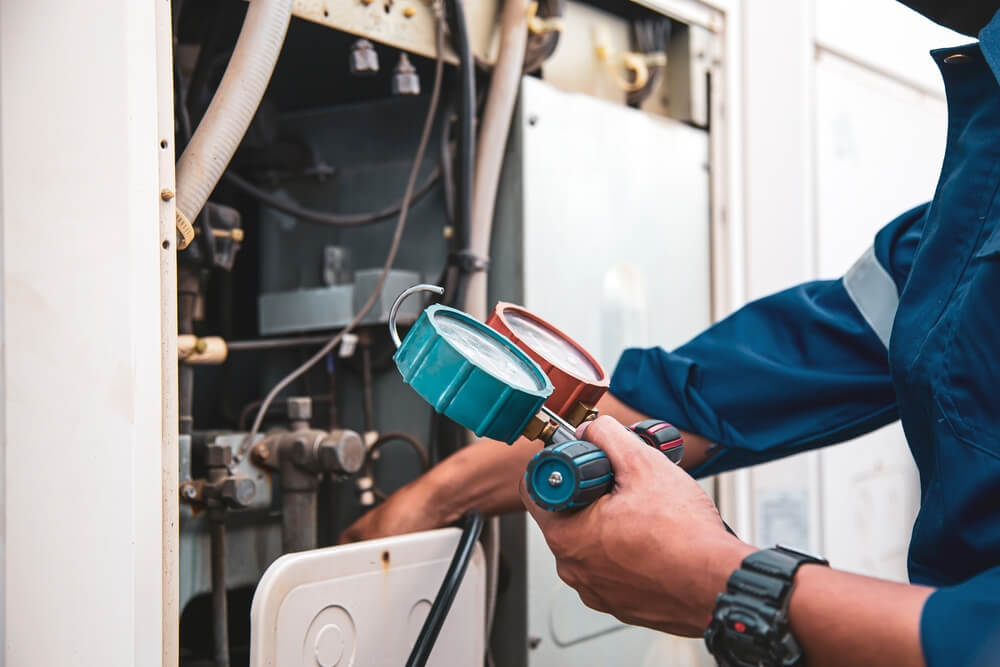
Don’t set the heat too high or your AC too low. Keep the indoor temperature setting higher in summer at 75֯F (24C) and 70֯F (21C) during the cooler months. An HVAC system set at 75 degrees will use 18% more energy than one set at 78 degrees.
Improve the insulation
Better insulation in your area has a direct impact on your HVAC system efficiency. The better your home or commercial area is insulated, the better your HVAC system will run. Insulation reduces the amount of warm or cool air that escapes from your house. You don’t want to heat the outdoors in the winter or send cold air out in the summer. Therefore, the unit will not have to work harder to heat and cool your home again and again.
Related: Importance of HVAC Insulation
Seal the Ducts
Leaky ductwork is one of the most common and costly issues that is often overlooked during HVAC maintenance. This can cost you a lot of money as leaky ductwork can lead to high energy consumption. Cracks and holes allow air to escape before it reached the inside of your home. This makes the HVAC system work harder than it is required.
Inspect your duct system and seal up any openings to prevent air leakage. By using a product like Aeroseal, any cracks and holes will easily be filled, preventing any more air leakage.
Check your Doors and Windows
Keep doors and windows shut when your HVAC system is running. Ensure there are no leaks or spaces around doors and windows that can allow the air to escape. A sealed home is a great way to save energy. Whereas, If there is a leak, install weather stripping around doors and windows. If you are constructing a new home or renovating an existing one, consider using a higher R-value for outside doors and windows.
Cover the window with Curtains
Keep your curtains or blinds closed during the hot summer days to block out some of the summer heat, allowing your home to maintain a cooler temperature. Alternatively, opening the curtains during winter will allow even the smallest amount of sunlight to come through thereby naturally warming your home, so your HVAC system will need to work less.
Some of these solutions are simple DIY tasks, but others require a professional touch. If you need help getting more out of your HVAC system, contact Alturas Contractors.
HVAC Energy-Saving Tips for Commercial Buildings
Commercial HVAC systems consume far more energy than residential systems. Implementing the right strategies can lead to major cost savings.
Commercial HVAC energy-saving tips include:
- Scheduled preventive maintenance contracts
- HVAC zoning systems
- Building Automation Systems (BAS)
- Air-side economizers
- Load management during peak hours
Frequently Asked Questions About HVAC Energy Savings
How can I reduce my HVAC electricity bill?
Regular maintenance, proper thermostat settings, sealed ducts, and clean filters are the most effective ways.
What thermostat setting saves the most energy?
78°F in summer and 68–70°F in winter offer optimal efficiency.
How often should HVAC filters be replaced?
Every 1–3 months, depending on usage.
Are smart thermostats worth it?
Yes. They can reduce HVAC energy costs by 10–15% annually.
Does HVAC maintenance really save energy?
Absolutely. A well-maintained system runs more efficiently and uses less energy.
